Zucchini & Snap Pea Bibimbap Bowls
with Sweet Sesame Sauce
- Sesame
- Soy
- Wheat
- Eggs
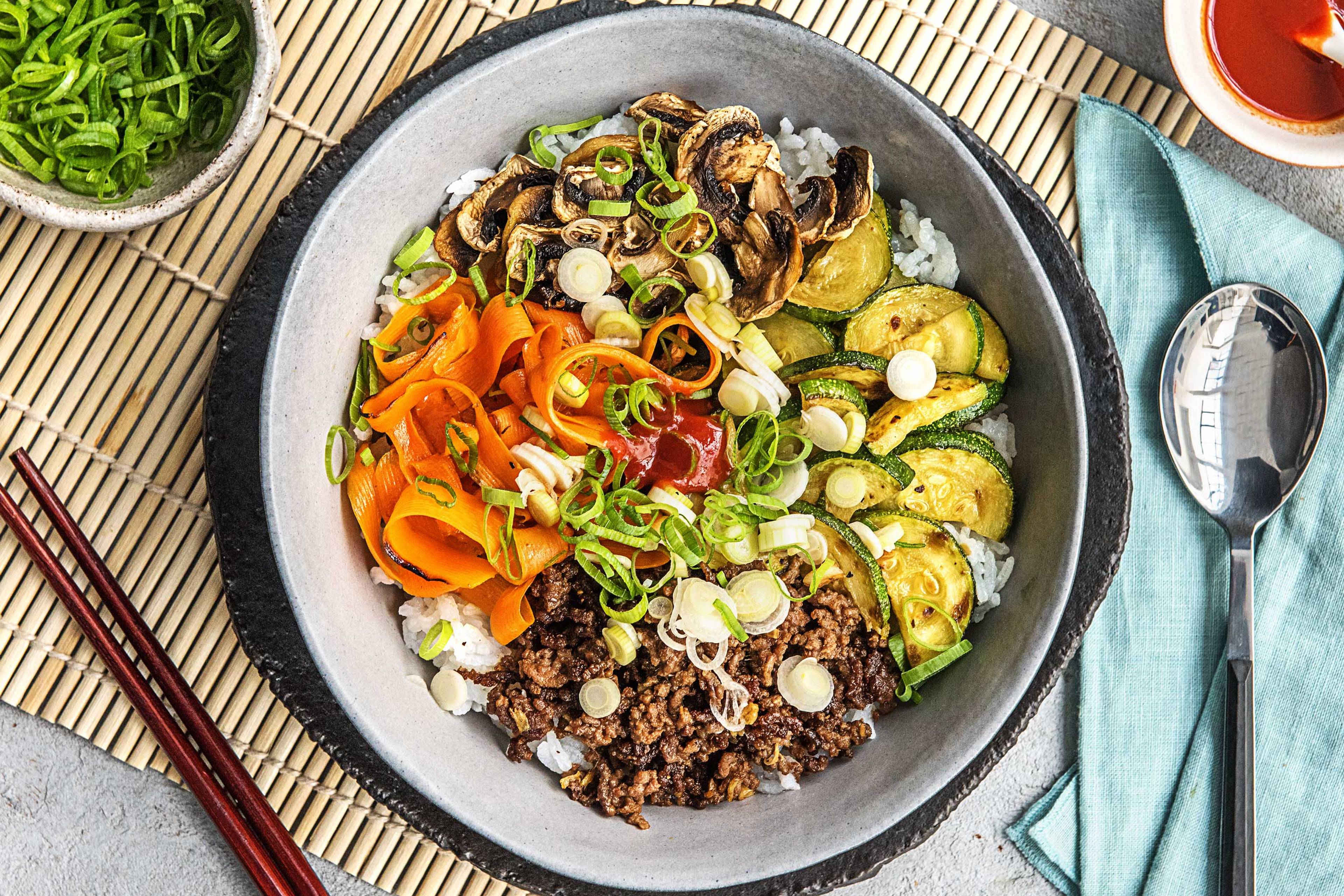
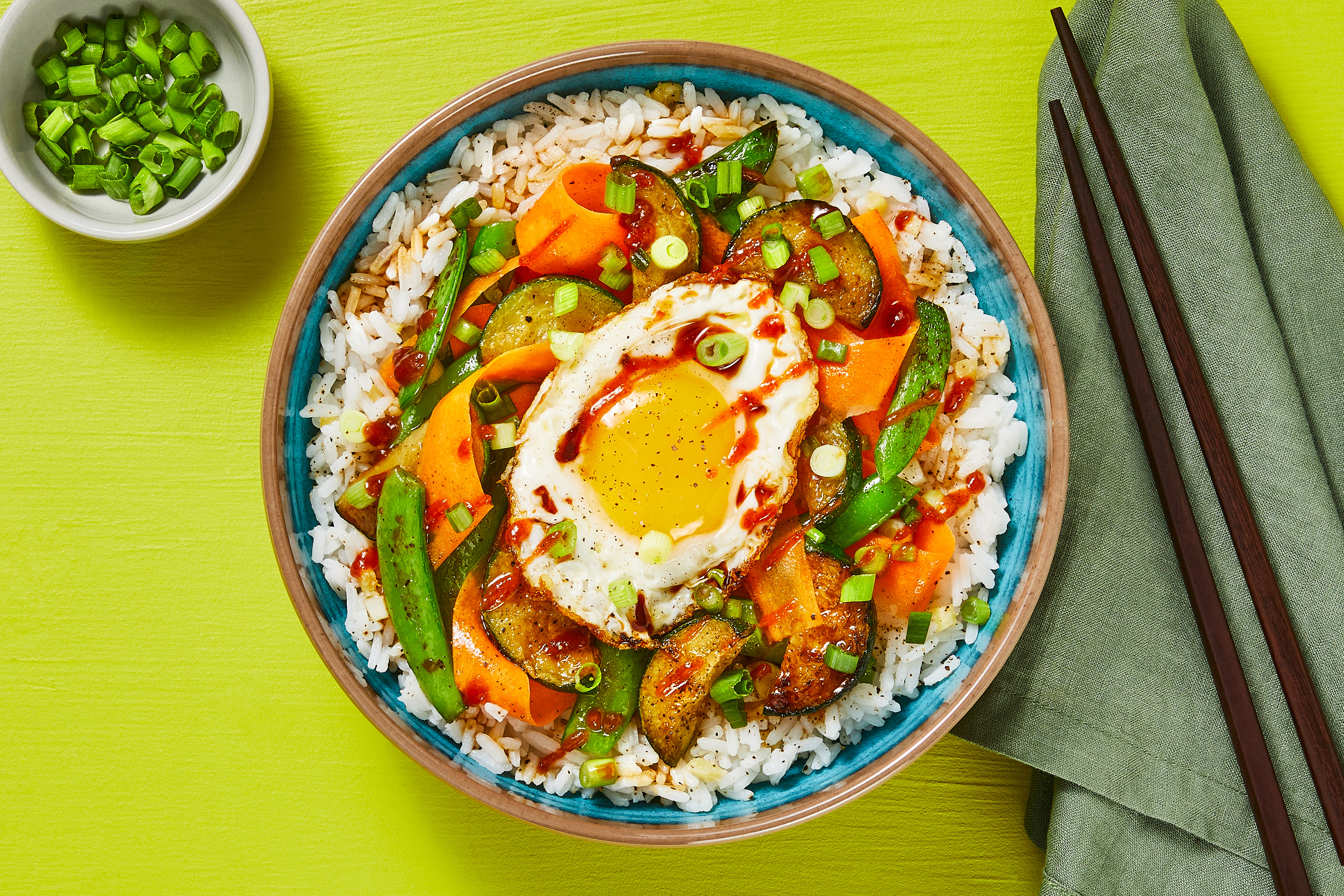
The only thing more fun than saying “bibimbap”? Eating it! Our riff on the classic Korean rice bowl is positively bursting with flavorful veggies. Sweet carrot ribbons, tender zucchini, lightly charred snap peas, and pickled scallions are arranged over a bed of steamy rice, just waiting to be mixed up and dug into. But not so fast! The bowl gets drizzled with an addictive sesame-Sriracha-soy sauce for a touch of savory-sweet heat in every bite.
Ingredients
1 thumb
Ginger
2 unit
Scallions
3 ounce
Carrot
1 unit
Zucchini
¾ cup
Jasmine Rice
5 teaspoon
White Wine Vinegar
1 tablespoon
Sesame Oil
(Contains: Sesame)
2 tablespoon
Soy Sauce
(Contains: Soy, Wheat)
1 teaspoon
Sriracha
4 ounce
Sugar Snap Peas
Not included in your delivery
2 unit
Eggs
(Contains: Eggs)
5 teaspoon
Cooking Oil
1 tablespoon
Sugar
Salt
Pepper
Nutrition Values
Utensils
Cooking Steps
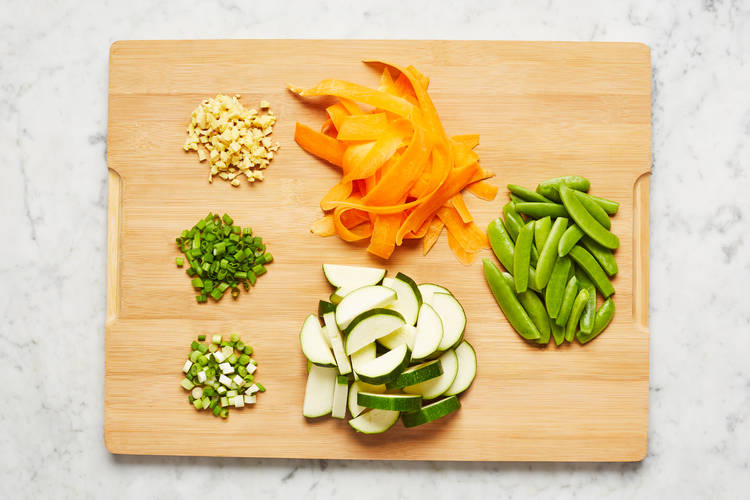
• Wash and dry produce. • Peel and mince or grate ginger. Trim and thinly slice scallions, separating whites from greens. Trim carrot; using a peeler, shave carrot lengthwise into ribbons, rotating as you go, until you get to the core. Discard core. Trim and halve zucchini lengthwise; cut crosswise into ¼-inch-thick half-moons. Trim and remove strings from snap peas.
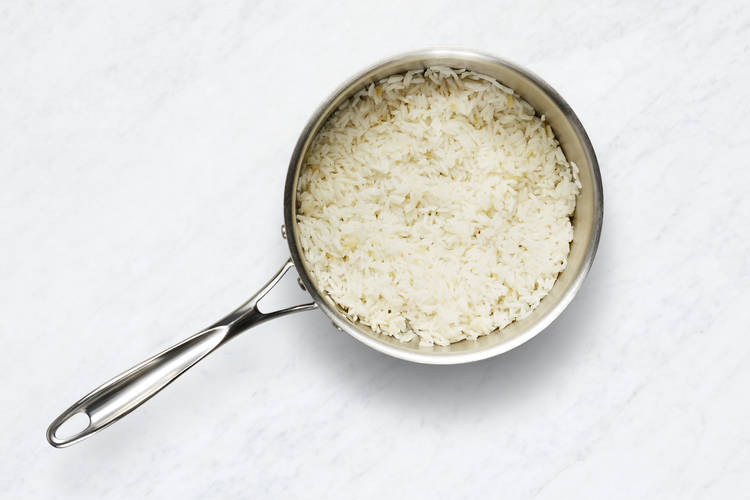
• Heat a drizzle of oil in a small pot over medium-high heat. Add ginger and cook, stirring, until fragrant, 30 seconds. • Stir in rice, 1¼ cups water (2¼ cups for 4 servings), and a pinch of salt. Bring to a boil, then cover and reduce to a low simmer. Cook until rice is tender, 15-18 minutes. • Keep covered off heat until ready to serve.
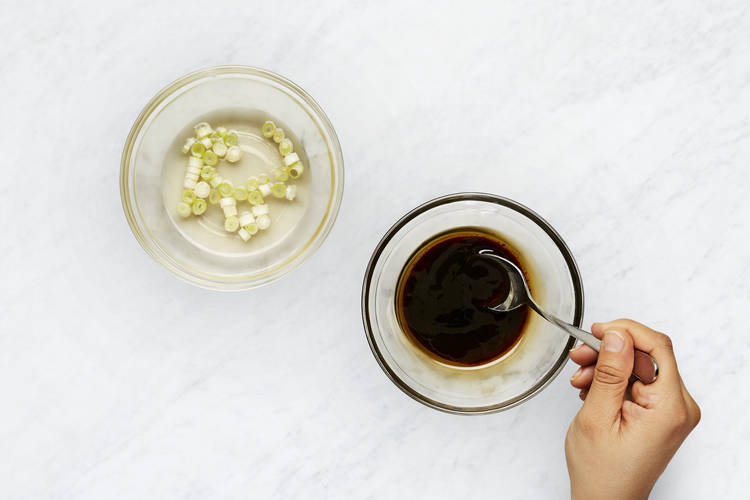
• While rice cooks, in a small bowl, combine scallion whites, vinegar, and a pinch of salt; set aside to pickle. • In a separate small bowl, combine sesame oil, soy sauce, 1 TBSP sugar (2 TBSP for 4 servings), and up to half the Sriracha (save the rest for serving).
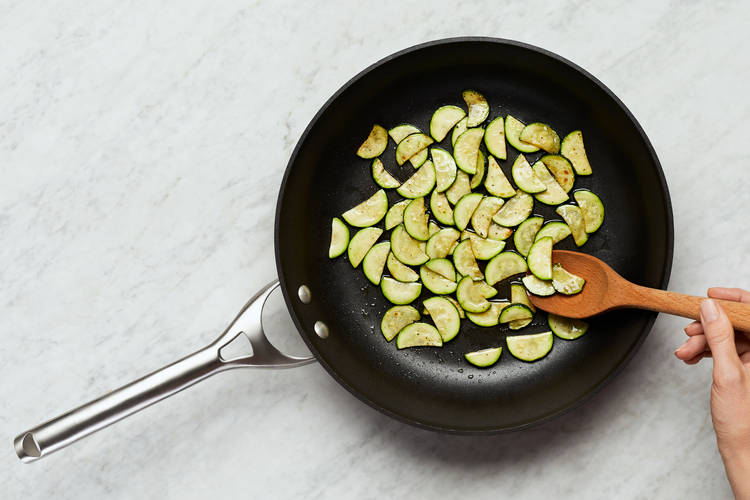
• Heat a drizzle of oil in a large, preferably nonstick, pan over medium-high heat. Add carrot and season with salt and pepper. Cook, stirring, until just tender, 3-4 minutes. Transfer to a medium bowl. • Add zucchini and another drizzle of oil to pan. Cook, stirring, until tender, 5-6 minutes. Season with salt and pepper. Transfer to bowl with carrot.
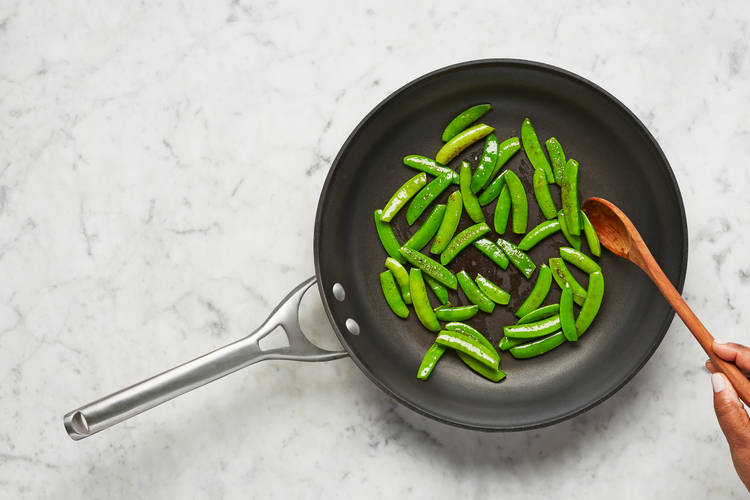
• Add snap peas and another drizzle of oil to same pan. Cook, undisturbed, until charred on one side, 1-2 minutes. Continue to cook, stirring occasionally, until tender and charred all over, 1-2 minutes more. Season with salt and pepper. • Turn off heat; transfer to bowl with veggies. • Optional: Wipe out pan. Heat a drizzle of oil in pan over medium heat. Once hot, crack two eggs* into pan and cover. (For 4 servings, use four eggs; you may want to cook eggs in batches.) Fry eggs to preference. Season with salt and pepper.
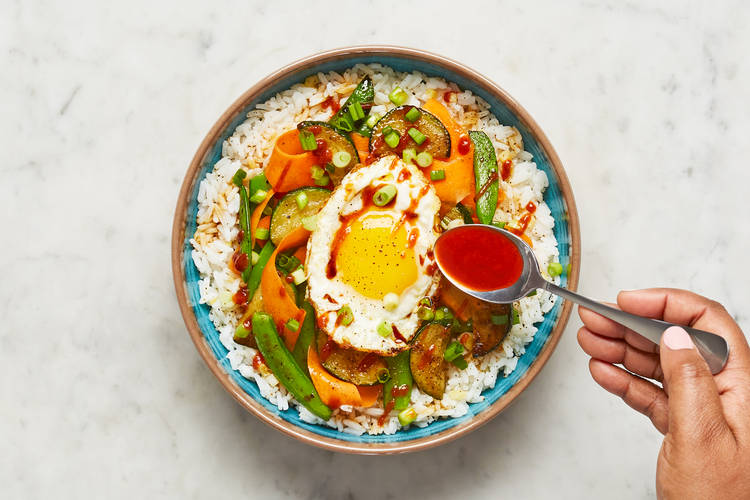
• Fluff rice with a fork; season with salt and pepper. • Divide rice between bowls. Arrange carrot, zucchini, and snap peas on top. Top each bowl with fried eggs (if using) and pickled scallion whites (draining first). Drizzle with sauce and any remaining Sriracha to taste. Sprinkle with scallion greens and serve.
Wash hands and surfaces after handling raw eggs. Consuming raw or undercooked eggs may increase your risk of foodborne illness.
Customer reviews
Review summary
Updated on Dec 2025- Flavor: Many loved the delicious combination of veggies and sauce, though some found it bland and wanted more seasoning.
- Ease of prep: Several felt the prep was time-consuming, especially cooking veggies separately and ribboning carrots.
- Suggestions: Consider adding protein like tofu or chicken; cook veggies together to save time; increase sauce quantity.
- Portions: Some found it filling, while others wanted more veggies or protein to make it more substantial.
- Authenticity: A few noted it's not truly authentic bibimbap and suggested using gochujang instead of sriracha.
Reviews from our home cooks
Love the flavors and the use of two beautiful veg (snap peas and zucchini). We added an egg to each serving because no one had eaten lunch -- perfect amount of yolk to create an unctuous mouth feel. Please include snap peas in MORE recipes we love them.
Bibimbap is supposed to be a Korean dish, so provide gochujang sauce and not Sriracha which doesn't belong in a Korean dish. This was a pretty disappointing dish and does not represent Korean cuisine well at all, it gives a wrong impression to everyone making this dish of what it should be. As a stand alone dish, it was still edible. Just please remove the Bibimbap title as this is not even close.
I've ordered this before and it always came with eggs. Now the recipe card says eggs are optional. Even the photo has an egg atop the meal. It was misleading. Even so, the meal was enjoyable and I especially liked the snap peas. Easy to cook.
This was a lot better than I thought! I decided to add some meat to it and I'm glad I did. The snap peas were surprisingly delicious too.
I'm not sure why the instructions said to cook the veggies separately. Why would I need to do that when it takes so much time and uses extra plates? Also I mixed the sauce in with the veggies so I wouldn't have to mix it in the small bowl I serve it in. And, why is there a photo of an egg when it doesn't come with an egg? I had to go to the store and buy eggs since that is such a pivotal part of bibimbap.
I love bibimbap and this was fun, delicious, and EASY. However, I'm sad no eggs were included, because they were in the picture. I only had one egg left, and I had to split it between the two bowls.
The recipe doesn't call for it but bibimbap usually also uses gochujjang. I added it and it definitely needed that enhancement. Otherwise as usual, very easy instructions, and a fantastic result.
Overall a very tasty dish, would recommend prepping the carrots by cutting them into matchstick sized pieces and briefly sauting them rather than uncooked ribbons. And adding a fried egg to the top is a must on bibimbap!
One of my new favorites!! This was really good. We added a fried egg to the top also to make it more authentic. Would love it if this had some authentic Bibimbap sauce (spicy) to go with it too.
This was absolutely delicious. The one thing I disliked was cooking all of the veggies separately. This was quite time consuming. I get that you want to char the veggies, but perhaps it could be done in fewer steps or without the need for multiple pans. I started with the zucchini and then ~3 minutes later added the carrot shavings. It came out great and shaved 4 minutes off the overall cooking time.